
Tel Aviv Weather, Time Zone & Travel Guide
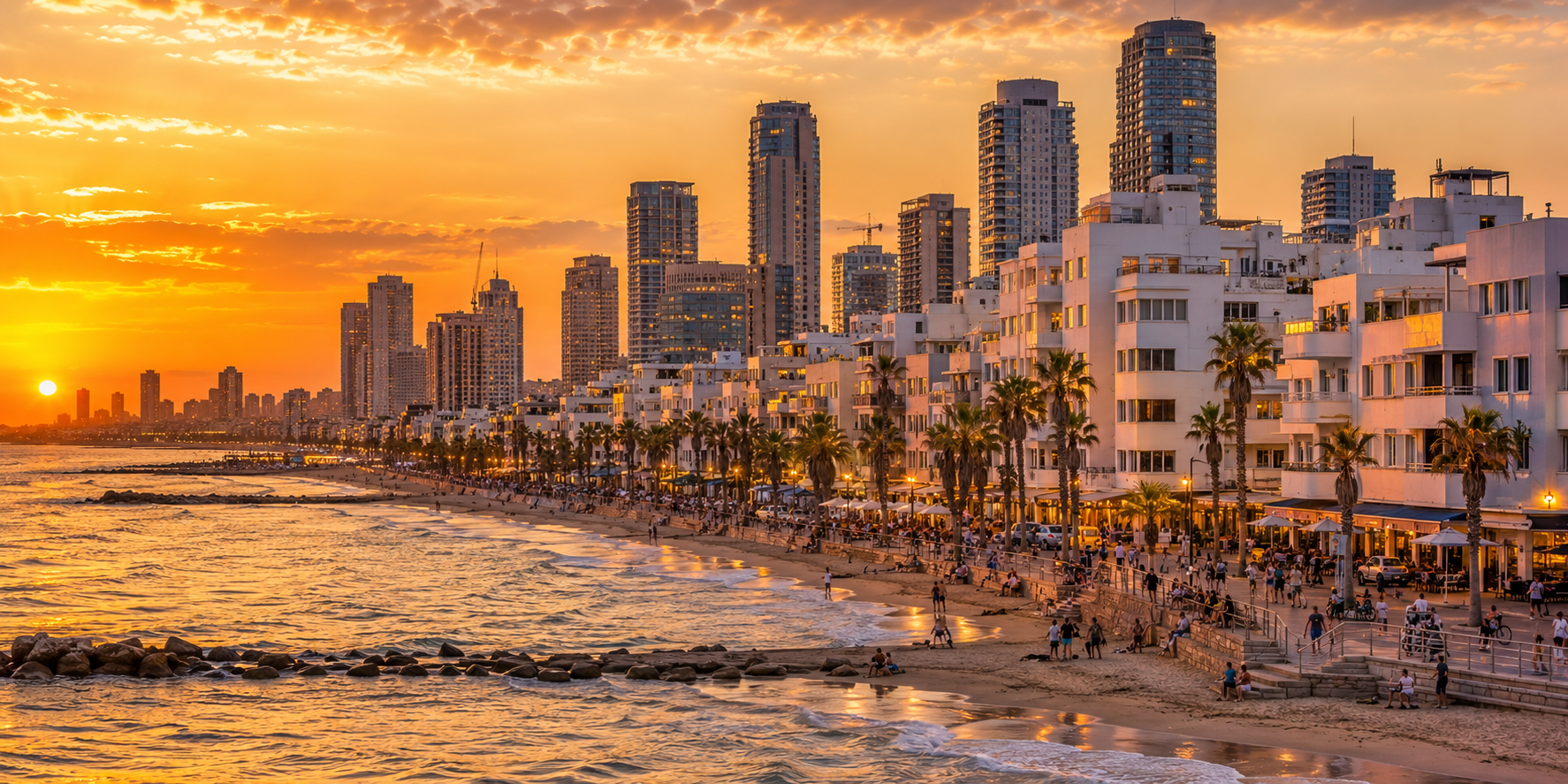
Tel Aviv sits at 32.1°N on Israel's Mediterranean coast, giving it a hot Mediterranean climate with long, hot, completely dry summers and short, mild, rainy winters. The city is one of the Middle East's most vibrant urban centers — a hub of tech, culture and beach life — and its weather is a key part of that identity: Tel Aviv averages over 300 sunny days per year.
Tel Aviv Climate by Season
Spring (March–May): Short but beautiful — temperatures climb from 60–75°F (15–24°C) with occasional late rain in March. The chamsin (a hot, dry desert wind from the east) can push temperatures above 95°F (35°C) for days at a time in April–May. UV index builds toward very high.
Summer (June–September): Long, hot and completely dry. Temperatures average 85–95°F (29–35°C) with high humidity from the Mediterranean sea breeze. UV index hits 9–11 (Very High to Extreme) daily. The famous Tel Aviv beach scene peaks in July–August — SPF 50+ is non-negotiable.
Autumn (October–November): The first rains return, temperatures drop to 65–80°F (18–27°C) and the city feels refreshed. October is an excellent time to visit — warm, lower UV and less crowded beaches.
Winter (December–February): Mild and wet by Middle Eastern standards — highs of 55–65°F (13–18°C) with regular rain. Snow is virtually unknown in Tel Aviv (though Jerusalem, just 40 miles away, occasionally gets snow). A waterproof jacket and light layers are enough.
Tel Aviv Time Zone
Tel Aviv uses Israel Standard Time (IST, UTC+2) in winter and Israel Daylight Time (IDT, UTC+3) during summer, observed from the last Friday before April 2 until the last Sunday in October. Israel's DST schedule differs from European and North American schedules — check the live clock above for the exact current offset, especially when scheduling international calls.
Time Difference: Tel Aviv vs Major Cities
London: Tel Aviv is 2–3 hours ahead of London (2 during European summer, 3 in winter).
New York: Tel Aviv is 7–9 hours ahead of New York depending on which DST offsets are active.
Paris / Rome: Tel Aviv is 1 hour ahead of Central European Time.
Dubai: Dubai is 1–2 hours ahead of Tel Aviv.
Tokyo: Tokyo is 6–7 hours ahead of Tel Aviv.
What to Pack for Tel Aviv
In summer, Tel Aviv's UV index hits Very High to Extreme (9–11) daily. SPF 50+ sunscreen, UV400 polarized sunglasses and a wide-brim hat are essential for beach days. The Mediterranean humidity makes it feel hotter than the thermometer suggests — check the live feels-like temperature above before heading out. A compact umbrella handles the brief winter rain. Israel uses Type C/H plugs (220V) — a universal travel adapter is essential for international visitors. A travel eSIM ensures seamless connectivity across Tel Aviv, Jerusalem and the rest of the country.
Frequently Asked Questions
What time is it in Tel Aviv right now?
The exact current local time in Tel Aviv is shown live above, automatically switching between IST (UTC+2) and IDT (UTC+3). Israel's DST schedule differs from Europe and North America.
When is the best time to visit Tel Aviv?
April–May and October–November offer the best balance of warm weather, manageable UV and lower crowds. Avoid August if you're sensitive to heat and humidity.
Does it rain in Tel Aviv in summer?
Almost never — Tel Aviv's summer (June–September) is completely dry. All rainfall occurs between November and March.
Is Tel Aviv hot in summer?
Yes — highs of 85–95°F (29–35°C) with high coastal humidity. Check the live feels-like temperature above, which often exceeds 100°F on humid days.