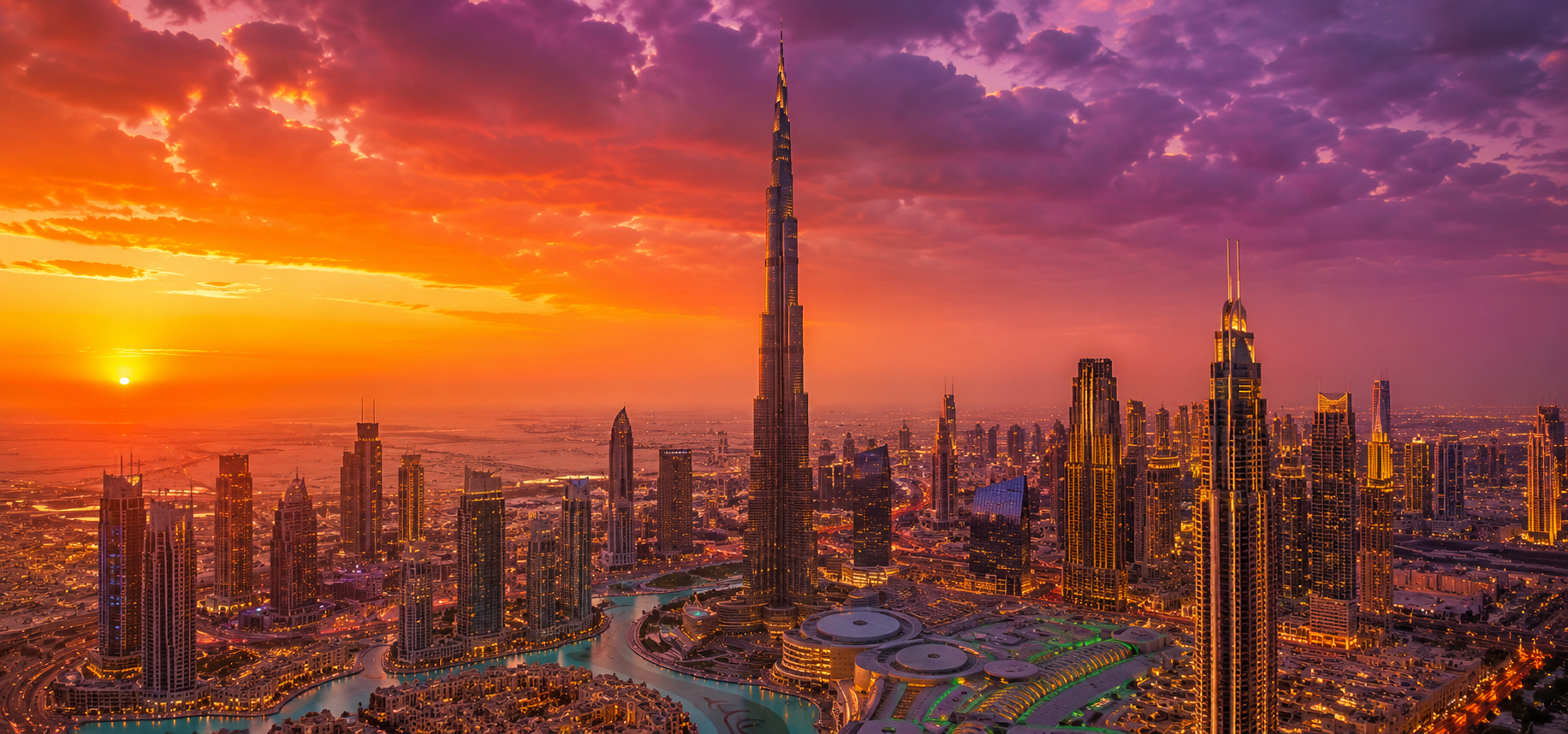

Dubai Weather, Time Zone & Travel Guide
Dubai sits at 25.2°N on the Persian Gulf coast of the UAE, giving it one of the world's most extreme desert climates. Summers are brutally hot — among the most intense of any major city — while winters are short, sunny and perfectly pleasant. The live UV index displayed above is especially critical in Dubai, where sun exposure becomes dangerous faster than almost anywhere else on Earth.
Dubai Climate by Season
Winter (November–March): The prime tourist season. Temperatures range from 65–80°F (18–27°C), skies are blue, and the city comes alive. UV index still reaches 5–7 even in "winter" — don't skip sunscreen.
Spring (April–May): Rapidly heating up, with April highs around 90°F (32°C) and May touching 100°F (38°C). Occasional sandstorms (haboobs) reduce visibility. UV index climbs toward 9–10.
Summer (June–September): Extreme — highs of 105–115°F (40–46°C), feels-like temperatures over 120°F, and UV index at 11+ (Extreme). Humidity from the Gulf makes coastal areas almost unbearable outdoors. Most outdoor activity moves to early morning or after sunset. Air conditioning is universal.
Autumn (October): Transition month — temperatures drop from 100°F toward the comfortable 80s. Still very sunny with UV index around 8. The ideal window for visitors who want warm weather without extreme heat.
Dubai Time Zone
Dubai operates on Gulf Standard Time (GST, UTC+4) year-round. The UAE does not observe Daylight Saving Time, making it one of the most stable time zones for international business calls.
Time Difference: Dubai vs Major Cities
London: Dubai is 4 hours ahead (3 hours during BST).
New York: Dubai is 9 hours ahead (8 hours during US Daylight Saving).
Paris / Rome: Dubai is 3 hours ahead.
Tokyo: Tokyo is 5 hours ahead of Dubai.
Sydney: Sydney is 6–7 hours ahead of Dubai.
What to Pack for Dubai
In summer, the UV index in Dubai regularly hits Extreme (11+) — burns can occur in under 10 minutes of unprotected exposure. SPF 50+ (reapply every 90 minutes), UV400 sunglasses, a wide-brim hat and a large insulated water bottle are non-negotiable. Lightweight loose-fitting clothing in light colors reflects heat better than dark fabrics. A universal travel adapter (UAE uses Type G plugs) and travel eSIM ensure connectivity from the moment you land.
Frequently Asked Questions
What time is it in Dubai right now?
The exact current time in Dubai (GST, UTC+4) is shown live above — Dubai does not observe Daylight Saving Time.
How hot does Dubai get?
July and August regularly exceed 110°F (43°C), with feels-like temperatures over 120°F. Check the live heat index above before any outdoor activity.
What is the best time to visit Dubai?
November through March is ideal — mild temperatures around 70–80°F with clear skies and low humidity.