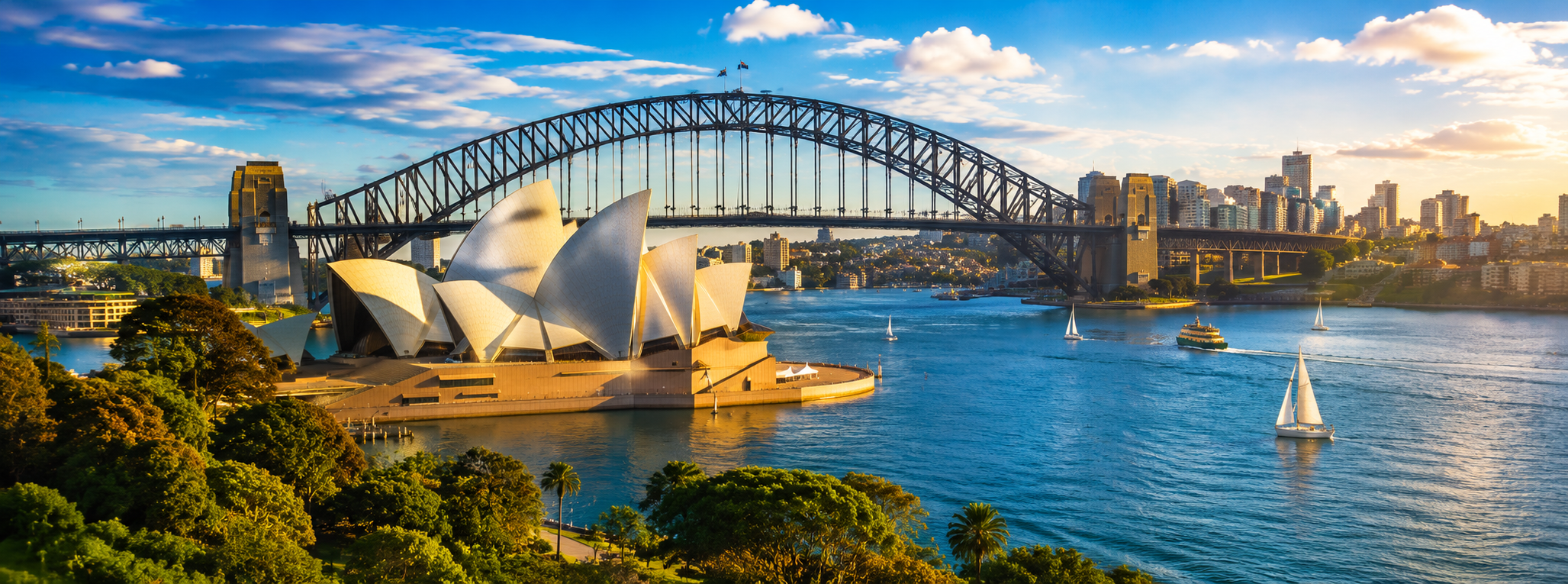

Sydney Weather, Time Zone & Travel Guide
Sydney sits at 33.9°S on Australia's southeastern coast — south of the equator, which means its seasons are reversed from the Northern Hemisphere. Its humid subtropical climate delivers warm, sunny summers (December–February), mild winters (June–August), and some of the highest UV indexes of any major world city. Australia's UV levels are famously intense — the "Slip, Slop, Slap" sun safety campaign originated here.
Sydney Climate by Season
Summer (December–February): Hot and sometimes humid, with highs of 80–90°F (27–32°C). UV index regularly reaches 11–13 (Extreme to Beyond Extreme) — the highest category. Bushfire smoke can occasionally reduce air quality. Christmas in Sydney means beach barbecues and sunburn risk within 10 minutes.
Autumn (March–May): Warm and increasingly settled — arguably Sydney's most beautiful season. April sits at a perfect 65–75°F (18–24°C) with lower humidity and UV moderating to high (6–8). Crowds thin after Easter.
Winter (June–August): Mild and mostly sunny — 55–65°F (13–18°C) with crisp, clear days. UV index drops to moderate (3–5) but never zero. A light jacket handles most winter evenings.
Spring (September–November): Wildflowers bloom, temperatures climb and UV starts building again. October brings the Jacaranda season — purple trees across the northern suburbs. UV reaches 8–10 by November.
Sydney Time Zone
Sydney uses Australian Eastern Standard Time (AEST, UTC+10) in winter (April–October) and Australian Eastern Daylight Time (AEDT, UTC+11) in summer (October–April). Note: because seasons are reversed, Sydney is at UTC+11 during Northern Hemisphere winter — which affects calculations for calls with Europe and North America.
Time Difference: Sydney vs Major Cities
London: Sydney is 10–11 hours ahead (10 in European summer, 11 in European winter).
New York: Sydney is 14–16 hours ahead depending on DST offsets.
Tokyo: Tokyo is 1–2 hours behind Sydney.
Dubai: Dubai is 6–7 hours behind Sydney.
What to Pack for Sydney
Sun protection in Sydney is non-negotiable year-round — UV is intense even on overcast days. SPF 50+ (applied 20 minutes before going out), UV400 sunglasses and a wide-brim hat are Australian essentials. A compact umbrella handles Sydney's occasional heavy showers. For the beach at Bondi or Manly, reef-safe sunscreen and a rashguard are recommended. A universal travel adapter (Australia uses Type I plugs) and a travel eSIM complete the essentials kit for international visitors.
Frequently Asked Questions
What time is it in Sydney right now?
The exact current local time in Sydney is shown live above — automatically switching between AEST (UTC+10) and AEDT (UTC+11).
What is the UV index in Sydney?
Sydney's UV is among the world's highest. In summer, UV 11–13 (Extreme) is common. Check the live UV index above — burns can occur in under 10 minutes at those levels.
When is the best time to visit Sydney?
March–May (autumn) and September–October (spring) offer the most pleasant conditions — warm but not extreme, lower crowds and moderate UV.